
Customer care
Productcare guide.
Every piece at Agaira Studio carries a little bit of craft — handwoven threads, hand-tied dye, hand-embroidered motifs. With the right care, these pieces can be worn for years and passed down for generations, the way they're meant to be. Here's how to look after yours.
Before you begin
General care principles
Keep perfume, deodorant, and hairspray away from the fabric. Apply them before dressing, and let them dry fully before you put the saree or kurta on — these products can stain or discolour silk and zari permanently.
Avoid direct, prolonged sunlight. Sun fades dyes and weakens fibres over time, especially on silk and hand-dyed pieces.
Air your garment out after each wear. A couple of hours on a padded hanger in a shaded room lets it release moisture and any lingering odour.
Iron on the reverse side. Use a thin cotton cloth between the iron and the fabric, on a low-to-medium heat setting. Never iron directly over zari, sequins, or embroidery.
Refold along different lines every few months. A saree stored the same way for years will develop permanent creases, and eventually the fabric can weaken and tear along the fold.
Store away from plastic. Wrap pieces in a soft cotton or muslin cloth rather than a plastic cover — plastic traps moisture and can cause yellowing or mildew over time.
Keep pests away naturally. A few silica gel sachets, or a small pouch of neem leaves or cloves tucked into your storage box, helps protect natural fibres without any chemical odour.
When in doubt, test first. Test any cleaning method on an inside seam or hidden corner first — or simply ask us before you try something new.
Care by fabric
Kanjivaram (Kanchipuram) Silk ⌄
Rich, heavyweight silk woven with real or metallic zari borders and pallu — built to last, but the zari needs looking after.
Cleaning: Dry clean only. The weight of the silk and the zari work make home washing risky — moisture can tarnish the zari and cause the colours to bleed.
Storage: Wrap in a soft cotton or muslin cloth and store flat, or loosely rolled rather than tightly folded, to protect the zari from cracking at the fold lines.
A note on zari: Genuine zari can darken slightly with age and humidity — this is natural ageing, not damage. Keep it away from moisture and direct light to slow this down.
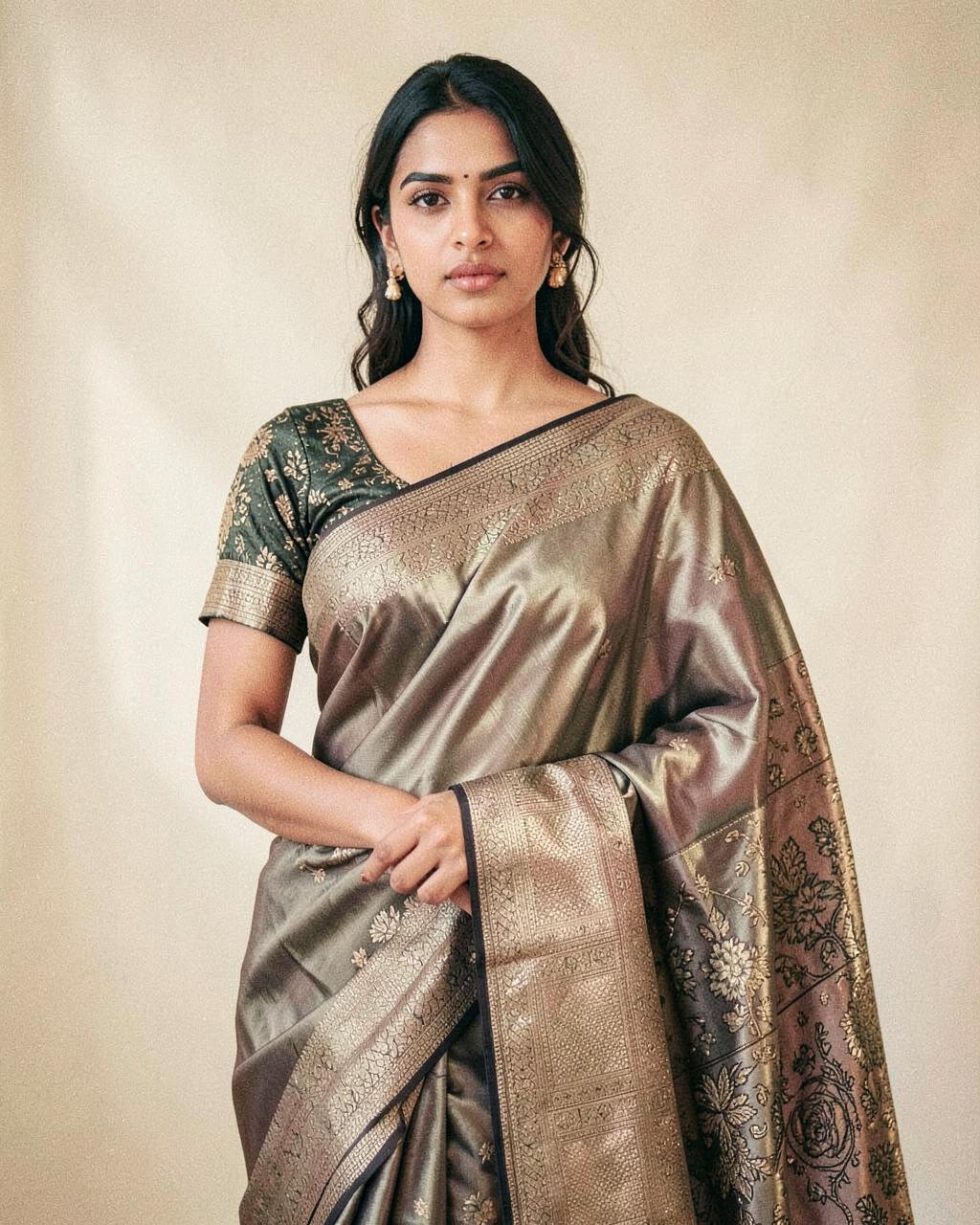
Banarasi Silk ⌄
Known for intricate brocade weaving and dense zari work, often in a Jangla, Tanchoi, or Cutwork pattern.
Cleaning: Dry clean only, ideally at a cleaner experienced with heavy zari-brocade silks.
Storage: Store flat where possible. If folding, use acid-free tissue paper between folds to cushion the brocade and prevent the metallic threads from snagging on the silk.
Handling: Be gentle around the brocade motifs when putting the saree on and taking it off — snagging is the most common cause of damage on Banarasi weaves.
Chanderi ⌄
A light, sheer, almost translucent weave, often in silk-cotton or pure silk with fine zari or woven buttis.
Cleaning: Dry clean is safest, especially for pure silk Chanderi. Silk-cotton blends can sometimes be gently hand-washed in cold water with a mild, pH-neutral detergent — check the specific piece's care label first, or ask us if you're unsure.
Drying: Never wring. Roll gently in a dry towel to remove excess water, then lay flat in the shade to dry.
Handling: The sheer weave snags easily on rough surfaces, jewellery, and rings — handle with care, particularly around the border.
Chikankari (hand embroidery on cotton or georgette) ⌄
Delicate white-on-white or coloured shadow embroidery, traditionally on fine cotton, georgette, or mul fabric.
Cleaning: Hand wash gently in cold water with a mild detergent, or dry clean for a longer-lasting finish, particularly on georgette. Never machine wash — the embroidery threads can catch and pull.
Drying: Dry flat in the shade, never in a machine dryer or direct sun.
Ironing: Iron on the reverse over a cloth, on a low setting, to protect the embroidery stitches from flattening or catching.
Kasavu (cream cotton with gold zari border) ⌄
The classic Kerala cotton saree, prized for its natural cream tone and gold zari border.
Cleaning: Hand wash separately in cold water with a mild detergent — the first wash especially, as natural cotton dye can run slightly. Avoid soaking for long periods.
Drying: Dry in the shade rather than direct sun, which can yellow the natural cream base over time.
Zari border: Keep the zari border dry and avoid rubbing it directly against rough surfaces when washing or drying to prevent tarnishing.
Starching: A light starch after washing helps restore the saree's characteristic crisp finish, if you like that look.
Bandhani (tie-dye) ⌄
Traditional resist-dyed fabric, typically on fine cotton, georgette, or silk, tied by hand into hundreds of tiny dots.
Cleaning: Dry clean or hand wash gently in cold water, separately from other garments — Bandhani dyes, especially darker shades, can bleed in early washes.
Drying: Dry flat in the shade.
A note on loose threads: The small tying threads left from the dyeing process are part of the traditional technique, not a defect — you can gently trim any that come loose after wear, or leave them be.
Georgette and Chiffon ⌄
Light, flowing fabrics commonly used for contemporary and embellished sarees.
Cleaning: Dry clean is recommended, particularly for sarees with embellishment (sequins, stonework, or embroidery). Plain georgette without embellishment can usually be hand-washed gently in cold water.
Drying: Never wring — the weave can distort permanently. Drip-dry on a padded hanger, away from direct sun.
Ironing: Use a low heat setting; georgette and chiffon scorch easily.
Cotton sarees and kurtas ⌄
Breathable, everyday-wear fabrics that are generally the most low-maintenance in the collection.
Cleaning: Hand wash or gentle machine wash in cold water, ideally inside a mesh laundry bag if machine washing. Wash dark or heavily dyed cottons separately for the first few washes.
Drying: Dry in the shade to preserve colour vibrancy; cotton dries quickly and doesn't need direct sun.
Ironing: Cotton tolerates a higher heat setting than silk or georgette, but still iron any printed or embroidered areas on the reverse.
Caring for embellishments
Zari and zardozi ⌄
Always dry clean. Keep away from moisture, perfume, and direct sunlight, which cause tarnishing and colour change over time.
Sequins and mirror work ⌄
Dry clean where possible. If hand washing the base fabric, turn the garment inside out first and avoid rubbing directly over the embellished area.
Tassels and borders ⌄
Handle gently when dressing and undressing — these are usually hand-attached and can loosen with repeated pulling or catching.
Quick reference
| Fabric | Recommended cleaning | Dry |
|---|---|---|
| Kanjivaram Silk | Dry clean only | Shade, flat/rolled |
| Banarasi Silk | Dry clean only | Shade, flat |
| Chanderi | Dry clean / gentle hand wash* | Shade, flat |
| Chikankari | Hand wash / dry clean | Shade, flat |
| Kasavu | Hand wash | Shade |
| Bandhani | Dry clean / hand wash | Shade, flat |
| Georgette / Chiffon | Dry clean* | Shade, hanging |
| Cotton | Hand or gentle machine wash | Shade |
* Check the specific product care label first.
Customer care
Not sure how to care
for your piece?
Every product page notes the specific fabric of that saree, kurta, or lehenga — when in doubt, check there first. And if you're ever unsure how to clean, store, or handle a piece from Agaira Studio, email us at info@agaira.co.uk with a photo, and we'll talk you through it.